


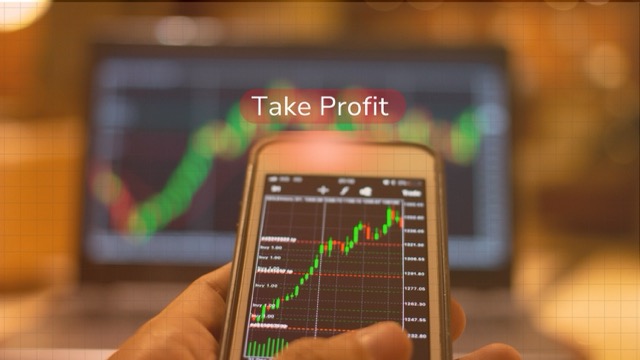
When I first started trading forex, I’ll admit—setting my take profit (TP) levels was a bit of a guessing game. I would look at the chart, pick a level that seemed reasonable, and hope that the market would hit it. More often than not, the market either reversed before I could hit my target or I set my TP too far, hoping for a bigger move. Either way, it didn’t end well.
It wasn’t until I began learning how to use take profit in forex with more precision that I saw real improvements in my trading. By focusing on a few key strategies and using a more structured approach, I stopped guessing and started setting TP levels based on real data. Today, I’m going to share how I learned to do just that—so you don’t have to make the same mistakes I did.
Why Take Profit Levels Matter
Before I dive into the specifics of how I set my TP levels, let’s first talk about why they matter. Setting your take profit isn’t just about hoping the market will keep moving in your favor. It’s about controlling your trades and securing profits.
Locks in Profits
One of the most obvious benefits of setting a TP level is that it locks in your profits once the market reaches a certain point. If you leave your trades open without a TP, you risk losing your gains if the market reverses unexpectedly.
Helps with Risk-Reward Ratio
A solid risk-reward ratio is key to long-term success in forex. By setting a TP level, you can ensure that for every trade you take, your potential reward outweighs your risk. For example, if your stop loss is 30 pips, and you set your TP at 60 pips, you’re aiming for a 2:1 risk-reward ratio.
Prevents Emotional Decisions
Without a take profit in place, it’s easy to get emotional during a trade. I’ve certainly been there, sitting glued to my screen, wondering if I should close the trade early or let it run a bit longer. Having a TP level helps take the emotion out of the decision-making process and gives you a clear exit point.
My Journey to Setting Take Profit Levels with Confidence
I didn’t always know how to set my TP levels correctly. When I first started trading, I’d often just pick a random point on the chart—sometimes based on support and resistance, sometimes not. It was a strategy that left a lot to be desired, to say the least.
Here’s how I turned things around and started setting take profit levels that made sense.
Step 1: Start with the Bigger Picture
One of the first things I did to improve my TP setting was to zoom out and look at the bigger picture. Often, new traders like me focus too much on short-term price movements and miss out on the broader trend.
What I learned is that the overall trend (whether it’s up or down) should heavily influence where I set my take profit. For example, if I’m in a buy trade and the market is in an uptrend, I’ll set my TP at a level that makes sense within that trend. Similarly, for a sell trade in a downtrend, I’ll set my TP a bit below recent lows.
Personal anecdote:
I remember a trade I took on EUR/USD when I was just starting out. I was in a long position, and I was confident that the trend was bullish. But instead of setting my TP in line with the general uptrend, I set it based on a random price point. The market moved up, but my TP was too close to the entry point. I missed out on a big move. After that, I started paying more attention to the overall trend and adjusting my TP accordingly.
Step 2: Use Support and Resistance Levels
Support and resistance levels are key indicators for setting realistic take profit levels. These levels represent price points where the market has historically reversed or stalled, so they’re great places to set your take profit.
Here’s how I use them:
- For buy trades: I’ll set my TP just before a strong resistance level where price could reverse or stall.
- For sell trades: I’ll set my TP just before a strong support level, where the price might find support and start to bounce back up.
Personal anecdote:
On a recent trade with GBP/JPY, I was in a short position. The price had been falling, and I saw a strong resistance level at around 150.50. Instead of guessing and setting my TP somewhere random, I placed my take profit just before this resistance zone, around 150.40. The price hit my TP and reversed—had I not been mindful of that resistance level, I would have missed out on the full profit.
Step 3: Fibonacci Retracement Levels
I’ll be honest: Fibonacci retracements confused me at first. But once I started learning how they work, I realized they’re incredibly useful for setting take profit levels. These levels, such as 23.6%, 38.2%, 50%, and 61.8%, are popular among traders for identifying potential reversal points in the market.
When setting my TP, I use Fibonacci retracements to identify price levels where the market might turn around. For example, after a significant price move, I’ll draw the Fibonacci retracement tool from the high to the low (for a downtrend), or from the low to the high (for an uptrend). Then, I’ll look for take profit targets at key Fibonacci levels.
Personal anecdote:
There was a time when I was trading AUD/USD, and I saw that the price had been trending up, but there was a recent pullback. I drew a Fibonacci retracement from the low to the high and noticed that the 50% retracement level aligned perfectly with a previous support zone. I set my TP just above that level, and the price hit my target. It was one of those moments where I realized how powerful Fibonacci could be for setting realistic and achievable TP levels.
Step 4: ATR (Average True Range) for Volatility
Another tool I use to set my take profit levels is the Average True Range (ATR). The ATR measures market volatility and gives you an idea of how much price is moving on average over a given period. When I trade more volatile pairs like GBP/JPY, I use the ATR to help set a wider TP level. For less volatile pairs like EUR/USD, I set a more conservative target.
Personal anecdote:
I remember one day when I was trading USD/CHF, a less volatile pair. I noticed that the ATR was only around 50 pips for the past few days, so I set my TP accordingly. I didn’t want to aim for 100 pips because it simply wasn’t realistic given the market’s recent movement. The trade hit my TP level within the expected time frame, and I was glad I didn’t overestimate the market’s potential.
Step 5: Use a Risk-Reward Ratio
Finally, I always calculate my risk-to-reward ratio before placing a trade. It’s one of the easiest ways to make sure I’m not setting a TP too high or too low. My typical target is a 2:1 or 3:1 risk-reward ratio, meaning I’m willing to risk $1 to potentially make $2 or $3. Once I know my stop loss, I use the risk-reward ratio to determine where my TP should be.
For example, if my stop loss is 30 pips, a 2:1 risk-reward ratio would suggest setting my TP at 60 pips. This way, I know that my potential reward is worth the risk I’m taking.
Final Thoughts: Stop Guessing and Start Planning
- If you’re still setting take profit levels based on guesswork or emotions, it’s time to make a change. By using the strategies I’ve outlined—like analyzing support and resistance, considering Fibonacci levels, factoring in volatility, and using a solid risk-reward ratio—you can set take profit levels that are based on real analysis and not just hope.
- Since I started using these methods, I’ve found that my trades are more consistent, my profits are more predictable, and I feel much more confident in my decisions.
- Trading doesn’t have to be about guesswork; it’s about planning and execution. So, next time you enter a trade, take a moment to carefully set your take profit levels. With a little bit of strategy, you’ll stop guessing and start seeing better results.
Next Article To Read: How I Use the Economic Calendar Before Placing Trades