


If you’re a beginner in the world of trading, one of the most important concepts you’ll need to understand is stop loss. I’ll be honest—when I first started, I didn’t fully grasp the significance of stop loss orders, and it cost me. Losing money on a trade is frustrating, but losing money without knowing how to protect yourself? That’s a lesson you don’t want to learn the hard way.
In this article, I’m going to break down what a stop loss is, why it’s so critical, and how to set one correctly. By the end, you’ll understand exactly how to use stop loss orders to protect your capital and manage your risks like a pro. Let’s get started!
What is a Stop Loss?
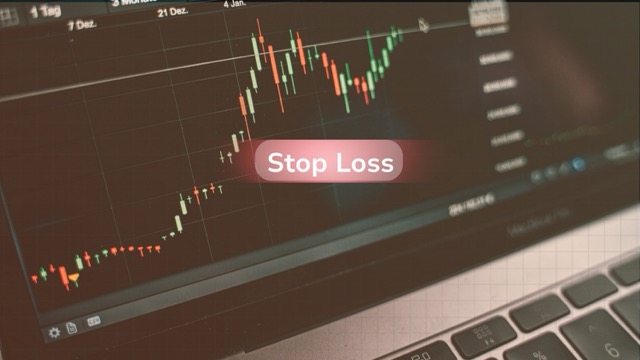
First things first, let’s clarify what a stop loss is. A stop loss is an order you place with your broker to automatically sell a stock (or any other asset) if its price falls to a certain level. This order helps to limit your potential losses on a trade by exiting the position before it gets too bad.
In simpler terms, think of a stop loss as your “safety net” that keeps you from going too far into the red. It’s like setting an emergency brake—if the market moves against you, your stop loss automatically pulls you out of the trade before things get worse.
For example, let’s say you buy a stock at \$100 and set a stop loss at \$90. If the stock price drops to \$90, your stop loss will automatically sell the stock for you, preventing any further losses. The idea is to **stop your losses before they get too big**, so you can live to trade another day.
Why Is a Stop Loss Critical for Beginners?
I get it—when you’re just starting out in trading, you might be excited about the potential profits, and it’s easy to forget about the risks. But here’s the thing: trading is all about managing risk. A stop loss is your first line of defense against unpredictable market movements, and for beginners, it’s an absolute must.
1. Protecting Your Capital
Your trading capital is the most important asset you have as a trader. If you lose all of it, you can’t trade anymore. The last thing you want is to take an avoidable loss that wipes out your account.
When I first started, I remember jumping into trades without thinking much about stop losses. One time, I bought a stock, and it immediately started to drop. I didn’t set a stop loss because I thought the stock would recover. It didn’t. By the time I sold, I’d lost way more than I intended. A stop loss would’ve prevented that scenario, allowing me to cut my losses before they spiraled.
2. Emotional Control
As a beginner, emotions can be your biggest enemy in trading. It’s easy to let fear or greed take over and make irrational decisions. **A stop loss takes the emotion out of the equation** by automatically executing a sell order when a certain price is hit. You don’t have to sit there staring at your screen, worrying about when to sell—it’s done for you.
In my early days, I often found myself in a “hope” phase, thinking, “Maybe this stock will bounce back.” But hope isn’t a strategy. A stop loss helps you manage your trades more objectively, without the emotional rollercoaster.
3. Risk Management
A key part of trading is **managing risk**—not just chasing profits. Most professional traders will tell you that you should never risk more than 1-2% of your total capital on any single trade. A stop loss helps you control your risk by setting a clear boundary on how much you’re willing to lose.
Let’s say you have a \$1,000 trading account and you set your stop loss to limit your losses to 1% per trade. If a trade goes against you, the most you can lose on that trade is \$10. This helps ensure you don’t take huge, account-ruining losses that could derail your progress.
How to Set Your First Stop Loss
Now that you know why stop losses are important, let’s talk about how to **actually set a stop loss** as a beginner. There are a few different ways to do this, and it depends on your trading strategy and the type of asset you’re trading. Here’s a step-by-step guide to help you get started.
1. Determine Your Risk Tolerance
Before you set a stop loss, you need to decide how much of your trading account you’re willing to risk. For example, let’s say you’re comfortable risking 2% of your capital on a single trade. If you have a \$1,000 trading account, that means you can risk up to \$20 on a trade. Once you’ve established your risk tolerance, you can use that to calculate where to place your stop loss.
2. Set a Price Level Based on Support or Resistance
One of the most common methods of setting a stop loss is by using **support** and **resistance** levels. Support is the price level at which a stock tends to find buying interest and bounce higher, while resistance is the price level where the stock faces selling pressure and tends to reverse downward.
If you’re buying a stock, you would typically set your stop loss just **below a support level**, as that’s where the stock has historically bounced. If the stock price falls below that level, it’s a sign that the trend may be reversing, and your stop loss will trigger to protect you from further losses.
For example, let’s say you buy a stock at \$100, and the nearest support level is \$95. You could set your stop loss at \$94 to give the stock a little wiggle room, but if it falls to \$94, your stop loss will be triggered.
3. Use a Percentage-Based Stop Loss
Another method for beginners is setting a **percentage-based stop loss**. This is simple and effective. If you decide that you’re willing to risk 5% on a trade, you would place your stop loss 5% below the price you bought the stock at.
For example, if you buy a stock at \$50 and you want to risk 5%, you would set your stop loss at \$47.50. If the stock drops to that price, your stop loss will execute, limiting your loss.
4. Monitor Your Trades Regularly
Once you’ve set your stop loss, it’s important to monitor your trade and adjust your stop loss if needed. For example, if the stock price rises significantly, you might want to **move your stop loss up** to lock in profits. This is called a **trailing stop loss**.
A trailing stop is a dynamic stop loss that moves up (or down) with the price of the asset. For instance, if your stock moves up to \$60, and you set a trailing stop loss at 5%, your stop loss would automatically move to \$57. If the price drops back down to \$57, the trade would close.
Common Mistakes to Avoid When Setting a Stop Loss
Now that you know how to set a stop loss, let’s quickly go over a few common mistakes that beginners make when setting stop losses. Avoid these, and you’ll be in much better shape:
1. Setting Stop Losses Too Tight
If your stop loss is set too close to your entry point, normal market fluctuations can trigger it prematurely. You want to give your trade room to breathe.
2. Not Adjusting Stop Losses as the Trade Moves
If a trade goes in your favor, don’t forget to adjust your stop loss to protect your profits. Trailing stops can help with this, but manually moving your stop loss is also a good practice.
3. Ignoring Volatility
Volatile stocks can move a lot in a short period, so you might need to adjust your stop loss to account for that volatility. Setting a stop loss too tight in a volatile market can result in getting stopped out too early.
Conclusion
Setting your first stop loss is a critical step in protecting your capital and managing risk as a beginner trader. It helps you limit your losses, take emotion out of trading, and preserve your account balance for the long term. While there are different methods for setting a stop loss, the key is to make sure you’re using one that fits your trading style and risk tolerance.
Trust me, setting stop losses early on can save you from a lot of frustration and disappointment. Once I got the hang of it, my trading became less stressful, and I felt more confident in my ability to manage risk.
So, the next time you make a trade, take a moment to set your stop loss—your future self will thank you!
Next Article To Read: The Psychology of Trading: How to Keep Emotions in Check